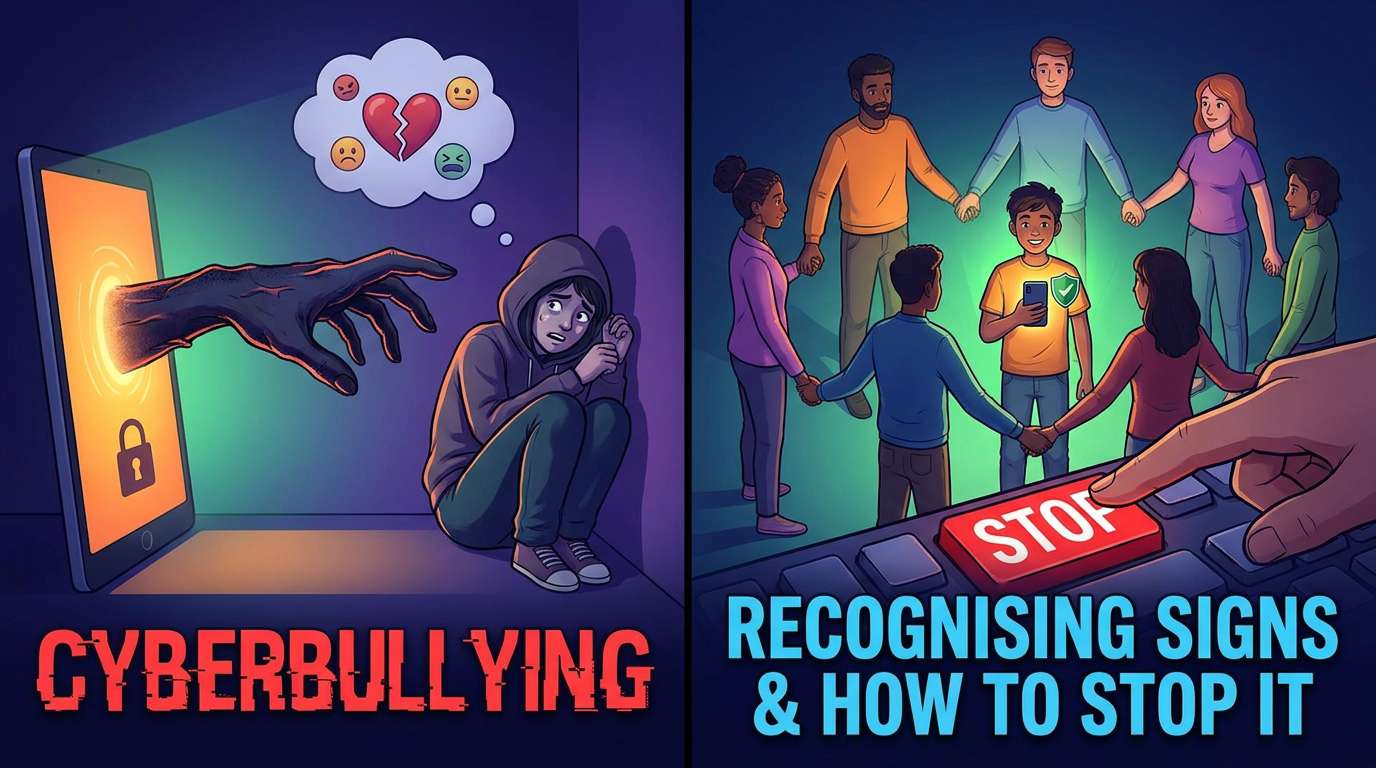
Cyberbullying: Recognising the Signs and How to Stop It
Introduction
The internet has opened up a world of opportunity for young people — a space to learn, create, connect, and express themselves. But alongside its many benefits, the digital world has also given rise to a deeply troubling problem: cyberbullying.
Unlike traditional bullying, which is limited to physical spaces such as the school playground or classroom, cyberbullying can follow a young person everywhere — into their bedroom, onto their phone, and into every corner of their online life. It does not stop when the school day ends. For many victims, there is no escape.
Understanding what cyberbullying is, recognising its warning signs, and knowing how to respond are essential skills for every young person, parent, and educator in today's connected world.
What Is Cyberbullying?
Cyberbullying is the use of digital technology — including social media, messaging apps, online games, and websites — to repeatedly harass, threaten, humiliate, or target another person.
Common forms of cyberbullying include:
- Harassment: Sending repeated hurtful, threatening, or abusive messages to someone online.
- Public humiliation: Posting embarrassing photos, videos, or information about someone without their consent.
- Exclusion: Deliberately leaving someone out of online group chats, games, or social spaces.
- Impersonation: Creating fake accounts or pretending to be someone else in order to damage their reputation.
- Spreading rumours: Sharing false or damaging information about someone online to turn others against them.
- Doxing: Sharing someone's private personal information — such as their address or phone number — without permission.
What makes cyberbullying particularly harmful is its reach. A hurtful message or embarrassing image can be shared with hundreds or thousands of people within minutes, making the damage far greater than most forms of traditional bullying.
How Common Is Cyberbullying?
Cyberbullying is far more widespread than many adults realise. Research consistently shows that a significant proportion of young people have experienced some form of online harassment. Studies suggest that girls are more likely to experience cyberbullying than boys, though boys are by no means exempt.
The rise of smartphones and social media platforms has made young people more connected than ever before — but it has also made them more vulnerable to online abuse. With many teenagers spending several hours each day on their devices, the opportunities for cyberbullying are unfortunately plentiful.
The Impact of Cyberbullying
The effects of cyberbullying on a young person's mental health and wellbeing can be severe and long-lasting.
Victims of cyberbullying may experience:
- Anxiety, depression, and low self-esteem.
- Difficulty sleeping and concentrating.
- A decline in academic performance.
- Withdrawal from friends, family, and social activities.
- A loss of interest in hobbies and activities they previously enjoyed.
- In severe cases, thoughts of self-harm or suicide.
It is important to take cyberbullying seriously. What may seem like "just words on a screen" to an outsider can cause profound and lasting damage to the person on the receiving end.
Recognising the Warning Signs
Young people who are being cyberbullied often try to hide what is happening out of shame, fear, or a belief that adults will not understand or be able to help. This is why it is so important for parents, teachers, and friends to be aware of the warning signs.
A young person may be experiencing cyberbullying if they:
- Become visibly upset or distressed after using their phone or computer.
- Suddenly stop using devices they previously enjoyed.
- Become secretive about their online activity.
- Withdraw from friends, family, and social situations.
- Show unexplained changes in mood, behaviour, or appetite.
- Appear reluctant to attend school or social events.
- Struggle to sleep or show signs of anxiety and low mood.
If you notice these signs in someone you care about, approach them gently and without judgement. Let them know that you are there to listen and support them, not to take away their devices or blame them for what is happening.
What to Do If You Are Being Cyberbullied
If you are experiencing cyberbullying, it is important to know that you are not alone and that there are steps you can take.
1. Do not respond.
Responding to a bully — even to defend yourself — can escalate the situation and encourage further abuse. It is almost always better to disengage.
2. Save the evidence.
Take screenshots of hurtful messages, posts, or images before deleting them. This evidence may be needed if you decide to report the bullying to a school or authority.
3. Block and report.
Most social media platforms and messaging apps have tools that allow you to block users and report abusive content. Use them. Reporting cyberbullying helps platforms take action and protects other potential victims.
4. Tell a trusted adult.
Speak to a parent, guardian, teacher, or school counsellor about what is happening. You do not have to face this alone, and the adults in your life are there to help.
5. Look after your mental health.
Being bullied online can be deeply hurtful. Make time for activities that make you feel good, stay connected with supportive friends and family, and do not hesitate to seek professional help if you are struggling emotionally.
How Bystanders Can Help
Cyberbullying often happens in public online spaces where others can see it. If you witness cyberbullying, you have the power to make a difference.
- Do not like, share, or comment on hurtful content — doing so amplifies the damage.
- Reach out privately to the person being targeted to let them know you support them.
- Report the content to the platform and, if appropriate, to a trusted adult.
- Speak up against bullying behaviour when it is safe to do so.
Bystanders who choose to act — rather than scroll past — can make an enormous difference to a victim's experience and sense of isolation.
The Responsibility of Schools and Parents
Addressing cyberbullying is not solely the responsibility of young people. Schools and parents have a vital role to play.
Schools should have clear anti-bullying policies that explicitly include cyberbullying, provide regular education on digital citizenship and online safety, and create an environment where students feel safe reporting abuse without fear of punishment or ridicule.
Parents should maintain open and non-judgemental conversations with their children about their online lives, monitor device use where appropriate, and ensure their children know they can come to them with concerns without fear of having their devices taken away.
Conclusion
Cyberbullying is a serious and growing problem that affects young people across the world. Its effects can be devastating, but they are not inevitable. With awareness, compassion, and the courage to speak up, cyberbullying can be challenged and stopped.
Every young person deserves to feel safe — both in the physical world and online. By recognising the signs, supporting those who are targeted, and refusing to remain silent, we can all play a part in making the digital world a kinder and safer place for everyone.
If you or someone you know is being cyberbullied, do not suffer in silence. Reach out, speak up, and remember — you are never alone.