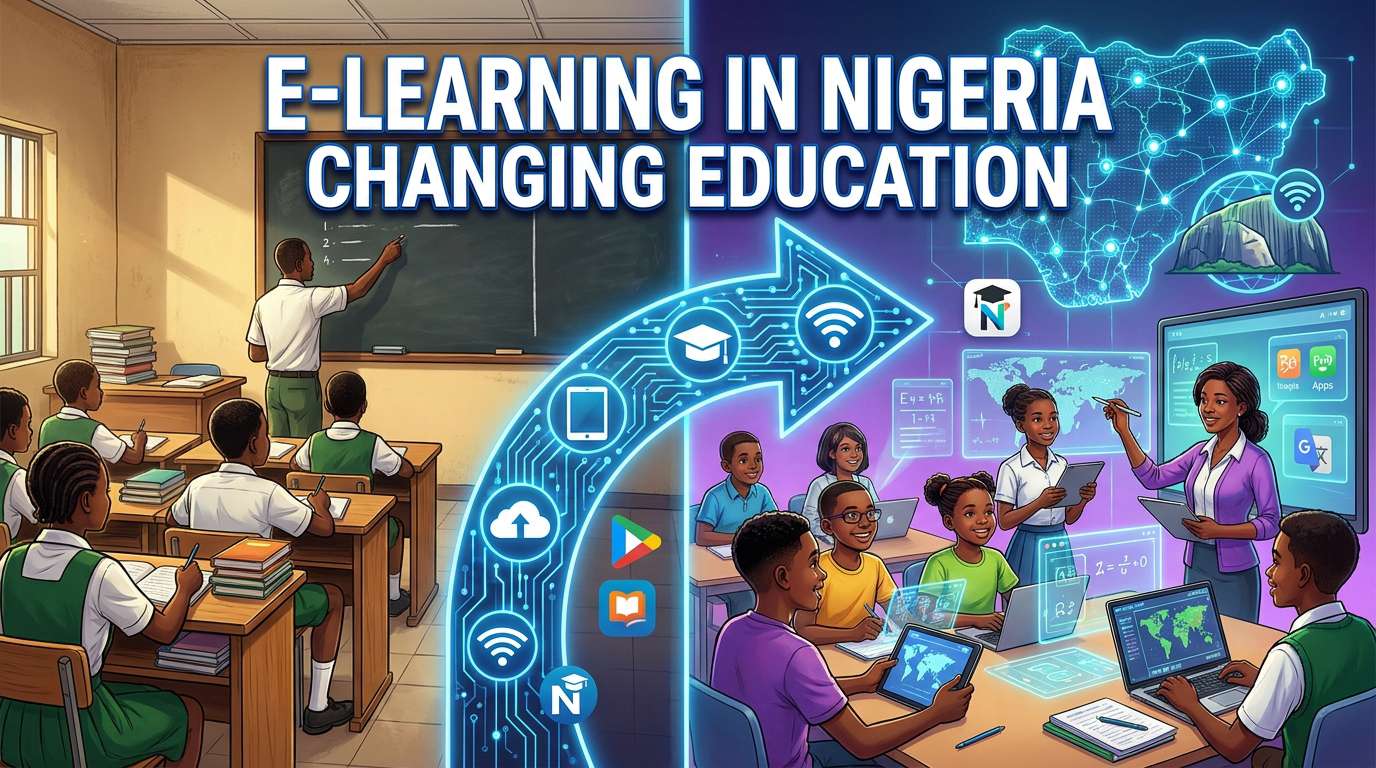
How E-Learning Platforms Are Changing Nigerian Education
Introduction
Not long ago, a student's access to quality educational materials depended almost entirely on the resources available at their specific school — the quality of their textbooks, the availability of past questions, and the expertise of their teachers. Today, a growing number of Nigerian students have access to a rapidly expanding world of digital learning resources, quiz platforms, video lessons, and online communities, often available directly through a smartphone, regardless of their specific school's own resource limitations.
This shift is being driven by the rapid growth of e-learning platforms — digital tools and services specifically designed to support learning outside the traditional physical classroom. This article explores how e-learning platforms are changing Nigerian education, their key features and genuine benefits, and the real challenges that continue to shape how effectively this transformation reaches all students.
What Is E-Learning?
E-learning (electronic learning) refers to education delivered through digital technology, typically involving the internet, allowing learning to take place outside the constraints of a traditional physical classroom setting, and often at a time and pace more flexible than conventional in-person instruction allows.
Common Features of E-Learning Platforms
Video Lessons
Many e-learning platforms provide recorded or live video lessons covering specific subjects and topics, allowing students to learn directly from instructors, often with the ability to pause, rewind, or rewatch content as needed to reinforce understanding.
Interactive Quizzes and Assessments
Digital quiz systems, such as those found on platforms like Edukated, allow students to test their understanding through interactive questions, often providing immediate feedback, which supports the active recall learning techniques discussed elsewhere in the Study Tips section of this resource library.
Digital Resource Libraries
E-learning platforms frequently provide access to structured articles, notes, past question banks, and other study materials, organized by subject and topic, making it easier for students to locate relevant resources for a specific area of study.
Progress Tracking
Many platforms track a student's activity and performance over time, including quiz scores and completed lessons, helping students (and, in some cases, parents or teachers) identify areas of strength and areas needing further attention.
Community and Discussion Features
Some e-learning platforms incorporate community forums or discussion features, allowing students to ask questions, share study strategies, and connect with peers preparing for the same examinations.
Benefits of E-Learning Platforms for Nigerian Students
Expanded Access to Quality Educational Resources
E-learning platforms can help bridge resource gaps between schools with differing levels of funding or infrastructure, giving students broader access to quality educational content regardless of their specific school's own resource limitations.
Flexibility in Pace and Timing
Unlike a traditional classroom, where all students generally move through material at the same pace, e-learning platforms often allow students to learn at their own pace, spending additional time on challenging topics and moving more quickly through material they already understand well.
Repeatable, Reviewable Content
Recorded video lessons and digital resources can be revisited multiple times, supporting the kind of spaced repetition and review discussed in the Study Tips articles within this resource library, in a way that a single, live classroom lesson generally cannot replicate.
Access to Targeted Exam Preparation
Many Nigerian e-learning platforms specifically focus on WAEC, JAMB, and NECO preparation, offering curated content, past questions, and quizzes closely aligned with these specific examinations' actual syllabus and question patterns, as discussed in the article on using past questions strategically.
Cost Considerations
While not universally free, many e-learning resources are considerably less expensive than private tutoring or supplementary physical learning materials, potentially expanding access to quality exam preparation resources for a broader range of students.
Genuine Challenges Facing E-Learning in Nigeria
Internet Access and Connectivity
Reliable internet access remains inconsistent across parts of Nigeria, particularly in rural areas, representing one of the most significant practical barriers to widespread e-learning adoption, regardless of how strong the educational content itself may be.
Device Access
Not every student has consistent, personal access to a smartphone, tablet, or computer, which can limit e-learning access for some students, particularly those from lower-income households, even where internet connectivity itself may be available.
Electricity Reliability
Inconsistent electricity supply in some areas can further complicate consistent access to e-learning platforms, particularly for extended study sessions requiring a charged device.
Data Costs
Mobile data costs can represent a genuine, ongoing expense for students relying primarily on mobile data for internet access, particularly for data-intensive content such as video lessons, as discussed in the article on digital versus paper notes.
Digital Literacy Requirements
Effectively using e-learning platforms requires a baseline level of digital literacy, as discussed in the dedicated article on this topic, which not every student may have had equal opportunity to develop.
Risk of Reduced Self-Discipline
The flexibility and independence e-learning offers can also present a challenge for some students, who may find it more difficult to maintain consistent study discipline without the structure of a traditional in-person classroom environment.
How E-Learning Complements Rather Than Replaces Traditional Schooling
It is worth emphasizing that e-learning platforms, in the current Nigerian context, generally function best as a valuable supplement to traditional in-person schooling, rather than a complete replacement for it. Traditional classrooms continue to offer important benefits e-learning cannot fully replicate, including direct teacher guidance and mentorship, structured social interaction and collaborative learning with peers, and consistent, in-person accountability. The most effective approach for many Nigerian students involves combining the strengths of both: traditional schooling for structured, guided instruction, and e-learning platforms for supplementary practice, review, and targeted exam preparation.
The Broader Significance for Nigeria's Education System
The continued growth of e-learning platforms reflects broader efforts to expand educational access and quality across Nigeria, aligning with the educational objectives set out in Chapter II of the Nigerian Constitution, discussed in the article on Fundamental Objectives and Directive Principles of State Policy. As internet access, device affordability, and digital literacy continue to improve across the country, e-learning platforms are likely to play an increasingly significant role in supporting Nigerian students' academic preparation and broader educational development.
E-Learning and WAEC/JAMB Technology
Key examinable areas of this topic include:
- The definition of e-learning and common features of e-learning platforms.
- The benefits of e-learning for Nigerian students, including flexibility and expanded access to resources.
- Genuine challenges affecting e-learning adoption in Nigeria, including connectivity, device access, and cost.
- The relationship between e-learning and traditional schooling, as complementary rather than fully substitutable.
Common Mistakes Students Make
- Assuming e-learning platforms are meant to fully replace traditional schools. In the current Nigerian context, they generally function most effectively as a valuable supplement to, rather than a complete replacement for, in-person education.
- Overlooking genuine infrastructure challenges, such as internet access, device availability, and electricity reliability, when discussing e-learning adoption in Nigeria.
- Assuming all e-learning platforms are entirely free, without recognizing that data costs and, in some cases, subscription fees remain real, practical considerations.
- Assuming flexibility in e-learning is purely beneficial, without recognizing the genuine self-discipline challenges it can present for some students.
- Treating e-learning as an entirely new phenomenon, without recognizing its connection to broader, ongoing national efforts to expand educational access and quality.
Conclusion
E-learning platforms are meaningfully reshaping how Nigerian students access educational resources, offering greater flexibility, expanded access to quality content, and increasingly targeted support for examinations such as WAEC, JAMB, and NECO. Yet this transformation remains genuinely uneven, shaped significantly by ongoing challenges around internet access, device availability, and electricity reliability that continue to affect different students and communities quite differently.
Understood realistically — as a valuable, expanding complement to traditional schooling rather than a complete substitute for it — e-learning represents one of the most significant, ongoing developments in Nigerian education, with the potential to meaningfully expand access to quality learning resources as the country's broader digital infrastructure and literacy continue to develop.