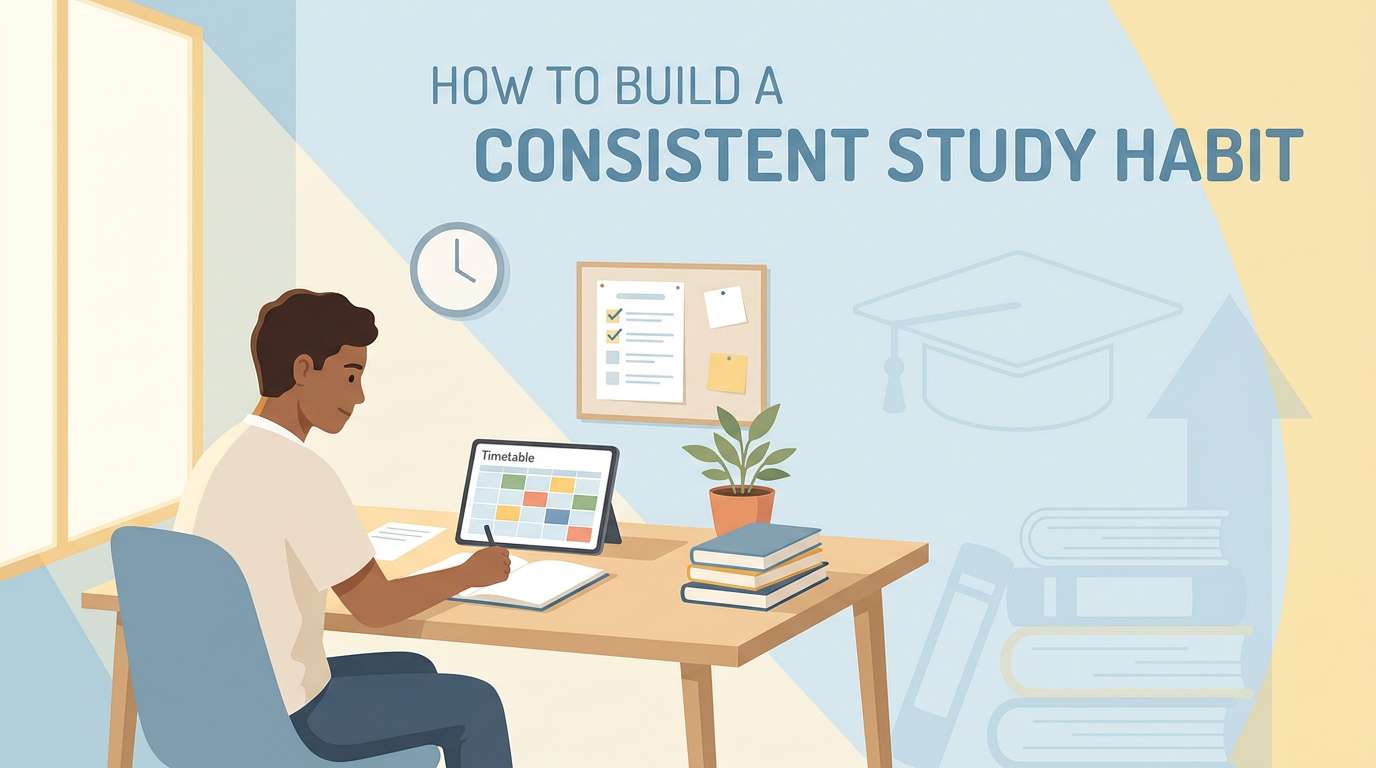
How to Build a Consistent Study Habit
Introduction
Many students begin each school term with the best intentions. They buy new notebooks, create ambitious timetables, and promise themselves they will study every day. However, after a few weeks, motivation fades, distractions take over, and studying becomes something they postpone until examinations are close.
The difference between top-performing students and average students is not always intelligence. More often, it is consistency. Developing a consistent study habit allows you to learn gradually, retain information better, reduce examination stress, and achieve better academic results.
This article explains practical steps that any student can follow to build a study habit that lasts.
What Is a Study Habit?
A study habit is a regular routine that helps you learn consistently. Instead of studying only when examinations are approaching, students with good study habits dedicate time every day or several days each week to reviewing lessons, practicing questions, and learning new topics.
Consistency turns studying into a normal part of your daily life rather than a difficult task.
Why Consistency Matters
Studying consistently has many benefits:
- You remember information for a longer time.
- You understand concepts more deeply.
- You avoid last-minute cramming.
- You become more confident during examinations.
- Your stress level reduces because you are always prepared.
- Learning becomes easier over time.
Small efforts repeated daily produce greater results than occasional long study sessions.
Step 1: Set Clear Academic Goals
Before creating a study routine, know exactly what you want to achieve.
Examples include:
- Score above 300 in JAMB.
- Obtain distinctions in WAEC.
- Improve Mathematics from a C to an A.
- Finish reading one textbook every month.
Specific goals give your study sessions direction and purpose.
Step 2: Create a Realistic Study Timetable
Many students create unrealistic schedules that they cannot maintain.
Instead of planning to study six hours every day immediately, begin with manageable sessions.
For example:
- Monday: 5:00 PM – 6:00 PM
- Tuesday: 5:00 PM – 6:00 PM
- Wednesday: Revision
- Thursday: Practice questions
- Friday: Science subjects
- Saturday: Longer study session
- Sunday: Weekly review
A timetable should fit around your school hours and other responsibilities.
Step 3: Study at the Same Time Every Day
Your brain develops routines through repetition.
Studying at the same time daily helps your mind prepare automatically for learning.
Whether you choose mornings, afternoons, or evenings, consistency is more important than the exact time.
Step 4: Choose a Good Study Environment
Your study location affects concentration.
An ideal study environment should be:
- Quiet
- Comfortable
- Well-lit
- Properly ventilated
- Free from unnecessary distractions
Keep only the materials you need nearby.
Step 5: Remove Distractions
Mobile phones, social media, television, and unnecessary conversations reduce productivity.
Before studying:
- Put your phone on silent.
- Turn off unnecessary notifications.
- Avoid checking social media.
- Inform family members that you are studying.
Even small distractions can interrupt your concentration.
Step 6: Break Your Study Sessions into Smaller Parts
Long hours without breaks often lead to fatigue.
A simple method is to study for about 25–50 minutes, then take a short 5–10 minute break.
During breaks:
- Stretch your body.
- Drink water.
- Rest your eyes.
Avoid spending your break scrolling endlessly through social media.
Step 7: Practice Active Learning
Reading alone is often not enough.
Improve learning by:
- Taking notes.
- Solving past questions.
- Teaching someone else.
- Creating summaries.
- Asking yourself questions.
- Using flashcards.
Active learning helps information remain in your memory longer.
Step 8: Review What You Learn
Many students forget lessons because they never revise them.
A good review schedule could be:
- Review today's lesson before sleeping.
- Revise again after one week.
- Review once more after one month.
Frequent revision strengthens long-term memory.
Step 9: Stay Healthy
Your brain performs best when your body is healthy.
Try to:
- Sleep 7–9 hours each night.
- Eat balanced meals.
- Drink enough water.
- Exercise regularly.
- Avoid excessive late-night studying.
A healthy body supports effective learning.
Step 10: Track Your Progress
Keep a record of your achievements.
You can monitor:
- Hours studied.
- Topics completed.
- Practice questions answered.
- Quiz scores.
- Weekly goals achieved.
Tracking progress helps you stay motivated because you can see your improvement over time.
Step 11: Reward Yourself
Studying should not feel like punishment.
After completing your study goals, reward yourself with something simple:
- Watch an episode of your favorite show.
- Listen to music.
- Spend time with friends.
- Enjoy a favorite snack.
Rewards make it easier to maintain positive habits.
Common Mistakes to Avoid
- Depend entirely on motivation.
- Skip difficult subjects.
- Study only before examinations.
- Spend more time planning than studying.
- Allow distractions to interrupt study sessions.
- Compare yourself constantly with others.
Avoiding these mistakes helps you remain consistent.
Staying Motivated During Difficult Times
There will be days when you don't feel like studying. That is normal.
Remember:
- Progress is built one day at a time.
- Missing one study session is not failure.
- Return to your schedule as soon as possible.
- Focus on improvement rather than perfection.
Consistency means continuing even when motivation is low.
Final Thoughts
Building a consistent study habit does not happen overnight. It requires patience, discipline, and commitment. Start with small, realistic goals and improve gradually. Every study session, no matter how short, brings you one step closer to academic success.
The students who achieve excellent results are rarely those who study only when examinations are near. They are usually the ones who learn a little every day, stay consistent, and keep improving over time.
Remember, success in education is not determined by occasional hard work but by consistent effort. Start today, remain disciplined, and your future self will thank you.