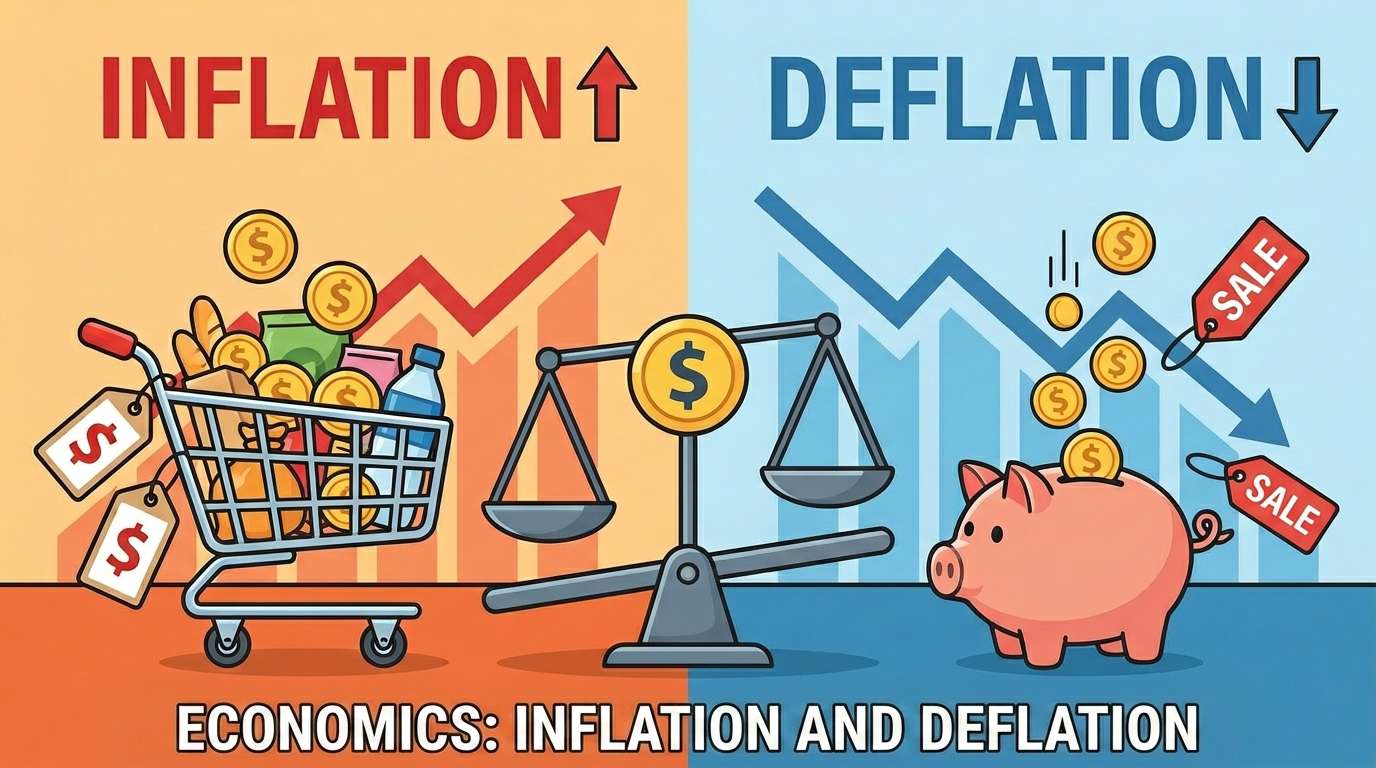
Inflation and Deflation
Inflation and deflation are important economic concepts that affect the prices of goods and services, the value of money, and the standard of living in a country.
Meaning of Inflation
Inflation is the persistent increase in the general price level of goods and services over time. This means the purchasing power of money falls.
For example, if a loaf of bread costs ₦500 today and rises to ₦700 next year, inflation has occurred.
Types of Inflation
1. Creeping Inflation
A slow and steady rise in prices, usually less than 3% yearly.
2. Walking Inflation
A moderate rise in prices, often between 3% and 10%.
3. Running Inflation
A rapid increase in prices causing economic instability.
4. Hyperinflation
An extreme rise in prices where money loses value quickly.
Causes of Inflation
- Demand-pull inflation (high demand, low supply)
- Cost-push inflation (high production costs)
- Excess money supply
- Imported inflation
Effects of Inflation
Positive Effects
- Encourages investment
- Boosts production
- Can reduce unemployment
Negative Effects
- Reduces purchasing power
- Increases cost of living
- Discourages savings
- Creates economic uncertainty
Control of Inflation
- Increase interest rates
- Reduce government spending
- Control money supply
- Increase taxation
Meaning of Deflation
Deflation is the persistent fall in the general price level of goods and services. It is the opposite of inflation.
This means money gains value and can buy more goods.
Causes of Deflation
- Low demand
- Overproduction
- Reduced money supply
- High unemployment
Effects of Deflation
Positive Effects
- Lower prices for consumers
- Money gains more value
Negative Effects
- Reduced business profits
- Job losses
- Slow economic growth
- Delayed spending
Differences Between Inflation and Deflation
| Inflation | Deflation |
|---|---|
| Prices rise | Prices fall |
| Money loses value | Money gains value |
| Encourages spending | Encourages saving |
Conclusion
Inflation and deflation are major indicators of economic stability. Moderate inflation can support growth, while excessive inflation or prolonged deflation can harm the economy.