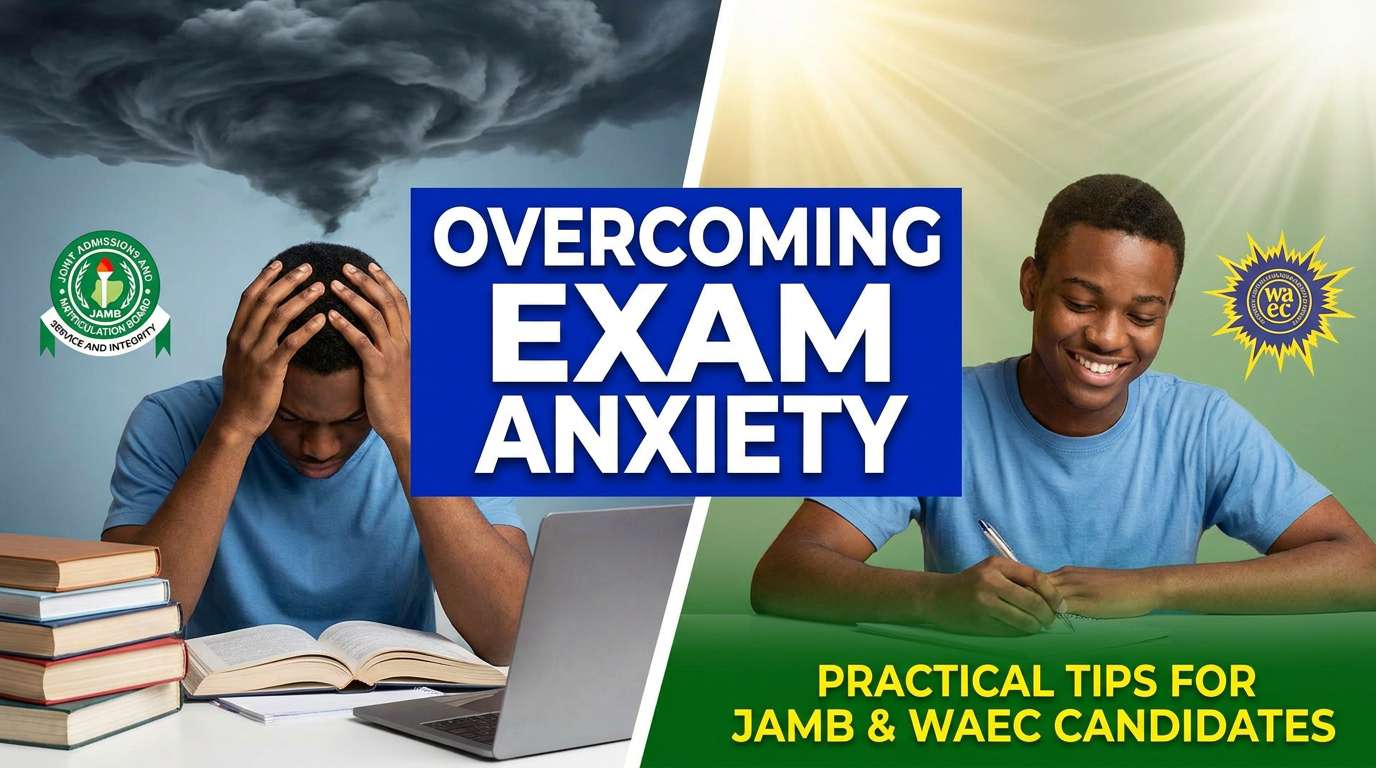
Overcoming Exam Anxiety: Practical Tips for JAMB and WAEC Candidates
Introduction
A student walks into the examination hall having studied for months. She knows the syllabus. She has completed dozens of past questions. Yet the moment the invigilator distributes the answer sheets, her hands begin to shake, her mind goes blank, and even simple questions she has answered correctly many times before suddenly feel impossible.
This experience — exam anxiety — is extremely common among JAMB and WAEC candidates, and it has little to do with how much a student has studied. Even the most prepared students can be affected by it, sometimes severely enough to underperform relative to their actual knowledge and ability.
The good news is that exam anxiety is not something you simply have to endure. It can be understood, managed, and significantly reduced with the right strategies — practiced consistently, not just remembered on the morning of the exam.
What Is Exam Anxiety?
Exam anxiety is a form of stress specifically tied to testing situations. It combines physical symptoms, emotional distress, and negative thinking patterns that occur before or during an examination.
Common symptoms include:
- A racing heartbeat or a feeling of tightness in the chest.
- Sweating palms, shaking hands, or a dry mouth.
- Difficulty concentrating or a feeling that the mind has gone blank.
- Persistent negative thoughts, such as "I am going to fail" or "I have forgotten everything."
- Nausea, headaches, or difficulty sleeping in the days leading up to the exam.
A small amount of nervousness before an important exam is normal and even helpful — it keeps you alert and focused. Exam anxiety becomes a problem when it grows large enough to interfere with clear thinking and recall.
Why Exam Anxiety Happens Even to Well-Prepared Students
The Stakes Feel Enormous
WAEC and JAMB results can determine university admission, course of study, and in the minds of many students and families, an entire future career path. When the perceived stakes are this high, the brain treats the exam less like a test of knowledge and more like a genuine threat — triggering the same stress response the body uses for physical danger.
The Fear of Being Judged
Many students carry an underlying fear of disappointing parents, teachers, or themselves. This fear can grow larger in the mind than the actual academic content of the exam, and it is often this fear — not the difficulty of the questions — that produces the most intense anxiety.
Uncertainty About What Will Be Asked
Even with extensive preparation, no student can predict every single question that will appear. This uncertainty, however small in reality, can feel overwhelming to a mind already primed for stress.
Physical and Mental Exhaustion
Many students arrive at exam season sleep-deprived, having sacrificed rest for last-minute cramming. A tired brain and body are far more vulnerable to anxiety than a well-rested one, regardless of how much material has actually been covered.
Strategies to Manage Anxiety in the Weeks Before the Exam
1. Prepare Steadily, Not Frantically
Anxiety is often worsened by a preparation style built entirely around last-minute cramming. A steady, spaced-out revision schedule — built well in advance rather than compressed into the final days — creates a stronger, calmer sense of genuine readiness.
2. Practice Under Exam-Like Conditions
Much of exam anxiety comes from the unfamiliarity of the exam environment itself — the silence, the time pressure, the formality. Reduce this unfamiliarity by occasionally practicing past questions under timed, exam-like conditions: no phone, no notes, a strict time limit, and a quiet room.
3. Protect Your Sleep
Sacrificing sleep to study more in the final days before an exam is one of the most common — and most counterproductive — habits among anxious students. Sleep deprivation impairs memory recall, concentration, and emotional regulation, making anxiety worse and performance weaker, not stronger.
4. Talk About Your Worries Instead of Bottling Them Up
Speaking to a parent, teacher, sibling, or friend about specific worries — rather than carrying them silently — often reduces their intensity. Saying a fear out loud ("I'm worried I won't finish Mathematics in time") frequently makes it feel more manageable and can lead to practical solutions, such as extra timed practice on exactly that concern.
5. Challenge Unhelpful Thoughts
Anxious thinking often involves extreme, unhelpful predictions: "If I fail this exam, my life is ruined." These thoughts feel true in the moment but rarely reflect reality accurately. When you notice a thought like this, gently ask yourself: is this actually certain, or is this fear speaking? What is a more balanced way to think about this situation?
Strategies to Manage Anxiety on the Day of the Exam
1. Prepare Everything the Night Before
Reduce avoidable morning stress by preparing your examination items — admission card, writing materials, calculator, appropriate clothing — the night before, rather than searching for them in a rush on the morning of the exam.
2. Eat a Proper Meal Before the Exam
Arriving hungry can worsen physical symptoms of anxiety, such as light-headedness or difficulty concentrating. Eat a balanced meal beforehand, avoiding anything unusually heavy or unfamiliar that might cause discomfort during the exam itself.
3. Use Slow Breathing to Calm Physical Symptoms
If you notice your heart racing or your hands shaking before the exam begins, try slow, deliberate breathing: inhale gently through your nose for a count of four, hold briefly, and exhale slowly through your mouth for a count of four. Repeating this for even one minute can measurably calm the body's stress response.
4. Read Through the Entire Paper Before Answering
Rather than diving straight into question one under pressure, spend the first few minutes reading through the entire paper. This helps you identify questions you feel confident about immediately, reducing the panic of feeling behind before you have even properly started.
5. Start With Questions You Feel Confident About
Answering a few familiar questions first, even if they are not the first questions listed on the paper, can build early momentum and confidence, making it easier to approach more difficult questions afterward with a calmer mind.
6. If Your Mind Goes Blank, Pause Rather Than Panic
A moment of blankness during an exam does not mean you have forgotten everything — it is often a temporary stress response. Pause for a few seconds, take one slow breath, and move to a different question rather than staying stuck and increasing your panic. Often, returning to the difficult question later, once you feel calmer, makes it far easier to answer.
7. Manage Your Time Without Obsessively Watching the Clock
Constantly checking the time can heighten anxiety. Instead, make a rough plan at the start — for example, deciding how many minutes each section should reasonably take — and check the clock only occasionally to confirm you are on track, rather than every few minutes.
Long-Term Habits That Reduce Exam Anxiety Over Time
- Regular physical activity — even short walks or simple exercise — helps regulate stress hormones and generally improves mood and focus.
- Consistent sleep patterns throughout the term, not just during exam season, build a stronger baseline resilience to stress.
- Realistic goal-setting, focusing on steady improvement rather than perfection, reduces the pressure that often fuels anxiety.
- Regular practice under timed conditions throughout your revision period, not just in the final days, builds genuine familiarity with exam pressure.
When Anxiety Becomes More Than "Normal Nervousness"
It is normal to feel some nervousness before an important examination. However, if anxiety is severe, persistent, and significantly interferes with sleep, eating, concentration, or daily functioning — not just around exam time, but more generally — it may be worth speaking to a trusted adult, school counsellor, or doctor. Support is available, and seeking it is a sign of strength, not weakness.
Conclusion
Exam anxiety is not a reflection of how much you know, and it does not mean you are somehow less capable than students who appear calm. It is a common, largely physical and psychological response that can be understood and managed with practical strategies — steady preparation, protected sleep, honest conversations about worry, calming breathing techniques, and smart in-exam habits.
You cannot eliminate every trace of nervousness before an exam as important as WAEC or JAMB, and you do not need to. The goal is not a completely calm mind, but a manageable one — steady enough to let the knowledge you have worked so hard to build actually show up on the page when it matters most.