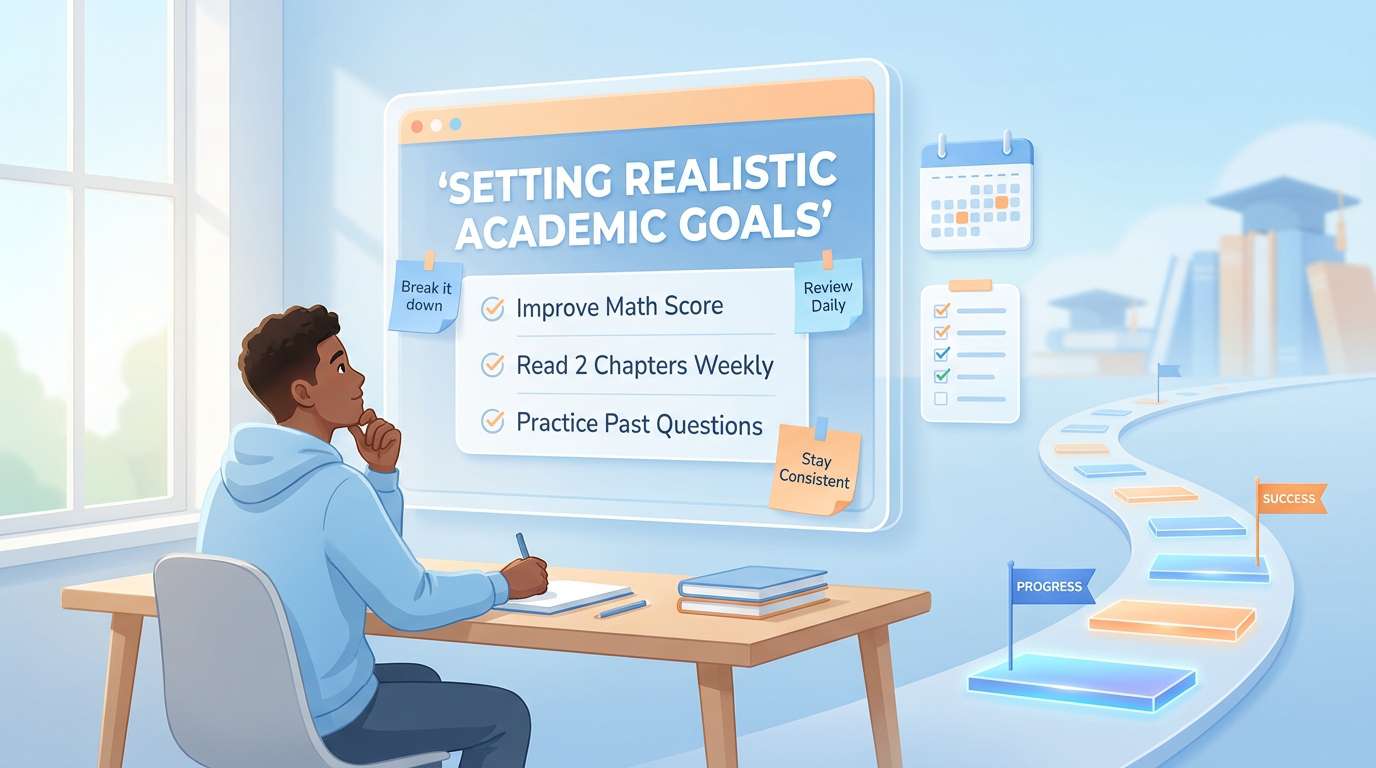
Setting Realistic Academic Goals
Introduction
Many students struggle academically not because they are incapable, but because they set goals that are either unclear or unrealistic. Goals like “I want to be the best in class” or “I will get straight A’s in everything” sound good, but without structure, they often lead to frustration.
Setting realistic academic goals helps students stay focused, motivated, and consistent. It turns vague ambition into a clear plan of action.
What Are Academic Goals?
Academic goals are specific targets students set to improve their learning and performance. These goals guide what you study, how you study, and how you measure success.
They can be:
- Short-term goals (daily or weekly targets)
- Medium-term goals (term or semester targets)
- Long-term goals (exam or career targets)
Why Realistic Goals Matter
Realistic goals are important because they:
- Keep you motivated
- Prevent burnout and frustration
- Help you track real progress
- Improve focus and discipline
- Make studying more organized and less stressful
When goals are too unrealistic, students often give up early because they feel overwhelmed.
Step 1: Understand Your Current Level
Before setting goals, you must be honest about your current academic position.
Ask yourself:
- Which subjects am I strong in?
- Which subjects am I weak in?
- What were my last exam scores?
- How much time do I actually have to study?
Knowing your starting point helps you set goals that are achievable.
Step 2: Make Your Goals Specific
Avoid vague goals like:
- I want to do better in Maths
- I want to pass all my exams
Instead, make them specific:
- I want to improve Maths from 50% to 75%
- I will solve 30 past questions every week
- I will read two Biology chapters every week
Specific goals give you clear direction.
Step 3: Set Measurable Targets
A good academic goal should be measurable so you can track progress.
Examples include:
- Number of pages read per day
- Practice questions completed per week
- Test scores per subject
- Chapters revised per month
If you cannot measure it, it is hard to know if you are improving.
Step 4: Break Big Goals into Smaller Steps
Large goals can feel overwhelming. Breaking them down makes them easier to achieve.
Example:
Big goal: Pass WAEC with distinctions
Break it into:
- Study 2 subjects daily
- Revise one topic per subject each week
- Practice past questions every weekend
- Take monthly mock tests
Small steps lead to big results.
Step 5: Set Realistic Timeframes
Time matters in goal setting. A goal without a timeframe often gets delayed.
Compare:
- Unrealistic: I will master Physics in one week
- Realistic: I will improve my Physics understanding over 3 months
Give yourself enough time to learn properly without pressure.
Step 6: Prioritize Important Subjects
Not all subjects require equal attention.
Focus more on:
- Subjects you struggle with
- Subjects that carry more weight in exams
- Subjects needed for your career path
This helps you use your time wisely.
Step 7: Write Down Your Goals
Writing your goals makes them more powerful and memorable.
You can write them in:
- A notebook
- Your phone notes
- A study planner
- On your wall
Written goals remind you of what you are working toward.
Step 8: Review and Adjust Regularly
Sometimes goals need adjustment. You may improve faster in some areas or struggle in others.
Every week or month:
- Check your progress
- Adjust your study plan
- Change strategies if needed
- Celebrate small improvements
Flexibility helps you stay consistent.
Common Mistakes to Avoid
- Setting too many goals at once
- Copying others’ goals without considering personal ability
- Ignoring weaker subjects
- Not tracking progress
- Giving up when progress is slow
Avoiding these mistakes improves your chances of success.
Conclusion
Setting realistic academic goals is one of the most important steps toward academic success. It helps you stay focused, organized, and motivated throughout your studies.
Remember, success is not achieved in a single day. It is built through small, consistent steps guided by clear and realistic goals.
Start small, stay consistent, and keep improving. Over time, your results will reflect your effort.