Understanding Citizenship: Rights and Obligations
Introduction
Every day, being a Nigerian citizen grants you access to protections and privileges you may rarely stop to think about — the right to live in your country without fear of expulsion, the right to vote for those who govern you, the protection of Nigerian law wherever you are within its borders. At the same time, citizenship is not simply a passive status of entitlement; it carries with it genuine responsibilities toward the nation and toward fellow citizens.
Citizenship is the formal, legal relationship between an individual and a state, conferring both rights and obligations on that individual as a recognized member of the political community. This article explores Nigerian citizenship in depth — how it is acquired, the rights it confers, the responsibilities it demands, and why understanding this relationship matters for every Nigerian student.
What Is Citizenship?
Citizenship refers to full and formal membership of a particular state, granting an individual specific legal rights, protections, and responsibilities in relation to that state. A citizen is distinguished from other categories of persons who might be present within a country's borders, such as visitors, refugees, or foreign residents, who typically do not enjoy the same full range of rights and protections that citizenship confers.
How Nigerian Citizenship Is Acquired
Chapter III of the Nigerian Constitution sets out the specific ways in which a person may become a Nigerian citizen.
Citizenship by Birth
A person is generally considered a Nigerian citizen by birth if, at the time of their birth, either of their parents or any of their grandparents belonged to a community indigenous to Nigeria. This is the most common way Nigerian citizenship is acquired, covering the vast majority of Nigerians.
Citizenship by Registration
Certain categories of people may become Nigerian citizens through registration, including a woman who is or has been married to a Nigerian citizen, and certain other individuals who meet specific conditions set out in law, such as demonstrating good character and a clear intention to reside in Nigeria.
Citizenship by Naturalization
A foreign national may apply to become a Nigerian citizen through naturalization, provided they meet a defined set of conditions, typically including a minimum period of continuous residence in Nigeria, good character, a demonstrated means of livelihood, and sufficient knowledge of a Nigerian language. Naturalization applications are considered and granted at the discretion of the President.
Dual Citizenship in Nigeria
Nigerian law permits dual citizenship for citizens by birth, meaning a Nigerian citizen by birth may also hold citizenship of another country without automatically losing their Nigerian citizenship. However, citizens who acquired Nigerian citizenship through registration or naturalization are generally required to renounce any other citizenship they hold.
Loss and Renunciation of Citizenship
Nigerian citizenship can, in certain limited circumstances, be lost or voluntarily renounced. A citizen may voluntarily renounce their Nigerian citizenship through a formal legal declaration. Citizenship acquired by registration or naturalization may also, in certain cases, be revoked by the government — for example, where it was obtained fraudulently, or where the individual is found to have acted disloyally toward Nigeria.
Rights Conferred by Citizenship
Nigerian citizens enjoy a range of rights, some available to all persons within Nigeria regardless of citizenship, and others reserved specifically for citizens.
Rights Guaranteed to All Persons (Citizens and Non-Citizens Alike)
Certain fundamental rights guaranteed under Chapter IV of the Constitution, such as the right to life, dignity of the human person, and fair hearing, apply broadly to all persons within Nigeria, not exclusively to citizens.
Rights Reserved Specifically for Citizens
- The right to vote and contest elections, generally reserved exclusively for Nigerian citizens who meet the relevant age and other eligibility requirements.
- The right to hold public office, including elective and certain senior appointive government positions, typically restricted to citizens, and in some cases, to citizens by birth specifically.
- The right of abode, meaning citizens cannot be deported or denied entry into their own country, unlike non-citizens who may, in certain circumstances, face deportation.
- The right to a Nigerian passport, enabling international travel under Nigerian nationality and consular protection while abroad.
- Certain property and employment rights that may, under specific laws, be reserved for or preferentially available to citizens.
The Obligations and Duties of Citizenship
Citizenship is not simply a one-directional relationship of entitlement — it also carries genuine responsibilities. Chapter II of the Constitution, alongside broader civic expectations, sets out duties citizens are generally expected to fulfil.
Obedience to the Law
Citizens are expected to obey the laws of Nigeria, respecting both the letter and the spirit of legal requirements established for the good order and safety of society.
Payment of Taxes
Citizens who earn income are generally required to pay applicable taxes, which provide essential government revenue used to fund public services such as education, healthcare, and infrastructure.
Respect for the Rights of Others
Citizens are expected to respect the dignity, rights, and freedoms of their fellow citizens, recognizing that one's own rights exist alongside, and must be balanced against, the equal rights of others.
Participation in the Democratic Process
Citizens are encouraged to participate actively in governance, particularly through voting in elections, and more broadly through engaging constructively with civic and community affairs.
Protection of Public Property
Citizens are expected to protect and preserve public property and the environment, rather than damaging or misusing shared national resources and infrastructure.
Loyalty and National Service
Citizens are expected to demonstrate loyalty to the nation, and may, in certain circumstances defined by law, be called upon to perform national service — a duty reflected in Nigeria's National Youth Service Corps (NYSC) programme, requiring qualifying graduates to undertake a year of national service.
Contribution to National Development
Citizens are broadly encouraged to contribute positively to the nation's social and economic development, whether through honest labour, civic engagement, or other constructive contributions to their community and country.
Why the Rights-Obligations Relationship Matters
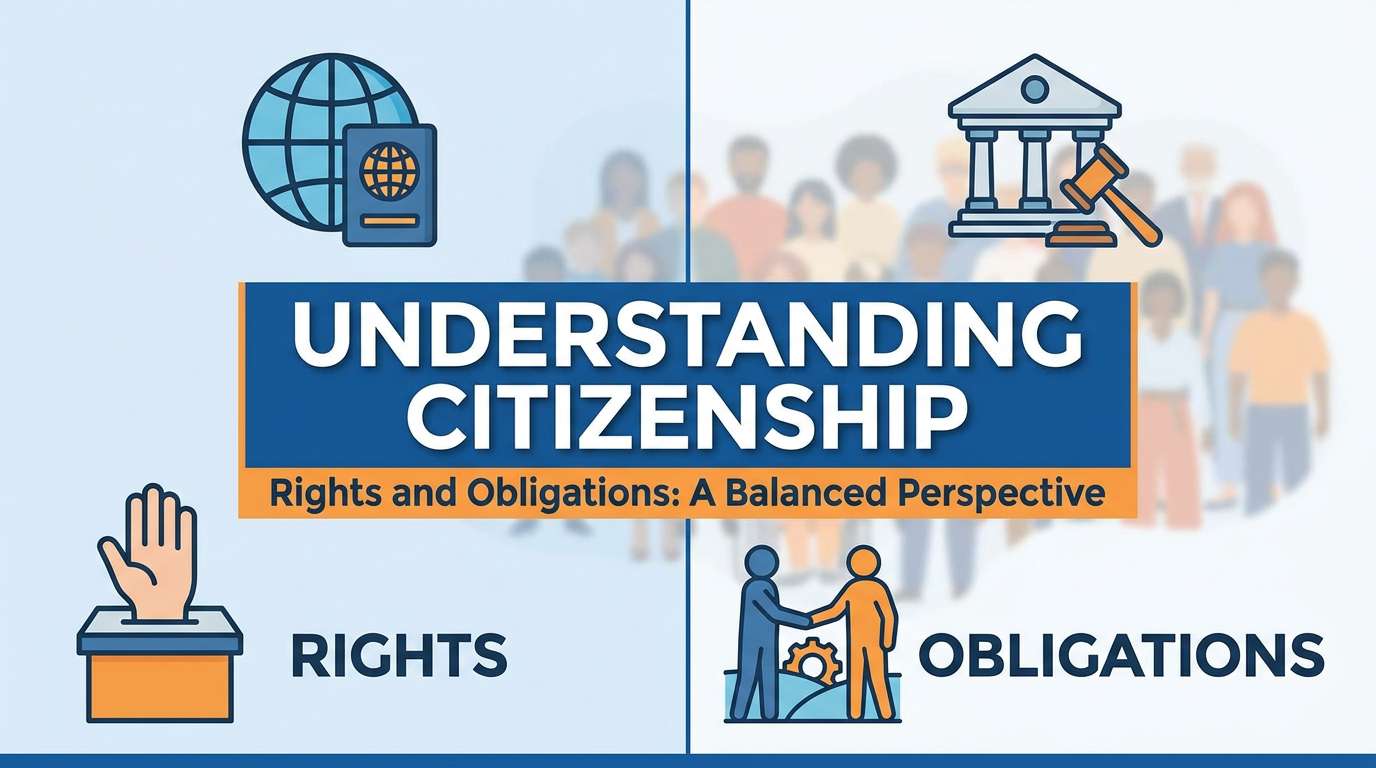
Citizenship functions as a genuine two-way relationship: the rights citizens enjoy are made possible, in significant part, by the willingness of citizens collectively to fulfil their corresponding obligations. Tax revenue, for example, depends on citizens honestly reporting and paying what they owe; the rule of law depends on citizens generally choosing to obey legal requirements rather than acting purely according to self-interest; and the quality of elected government depends on citizens participating meaningfully in the electoral process. A society in which citizens claim their rights while widely neglecting their obligations is unlikely to sustain the very benefits those rights are meant to protect.
Statelessness: A Brief Note
Statelessness refers to the condition of a person who is not recognized as a citizen by any state, leaving them without the legal protections, rights, and documentation that citizenship typically provides. Statelessness can create severe practical difficulties, including limited access to education, healthcare, formal employment, and freedom of movement, illustrating clearly just how significant the legal status of citizenship is to an individual's ability to participate fully in society.
Citizenship and WAEC/NECO Civic Education
Key examinable areas of this topic include:
- The definition of citizenship and how it differs from other forms of residence or presence within a state.
- The three ways Nigerian citizenship can be acquired: by birth, registration, and naturalization.
- Nigeria's approach to dual citizenship, including the distinction between citizens by birth and those by registration or naturalization.
- Rights specifically reserved for citizens, as distinct from rights available to all persons.
- The duties and obligations citizens owe to the state and to fellow citizens.
- The concept of statelessness and its practical consequences.
Common Mistakes Students Make
- Assuming all constitutional rights are reserved exclusively for citizens. Certain fundamental rights, such as the right to fair hearing, apply broadly to all persons within Nigeria, not only citizens.
- Confusing registration and naturalization as methods of acquiring citizenship. Registration typically applies to specific categories such as spouses of Nigerian citizens; naturalization is a more general process available to qualifying foreign nationals after meeting residency and other conditions.
- Assuming Nigeria permits dual citizenship for everyone equally. Dual citizenship is generally permitted for citizens by birth, but citizens by registration or naturalization are typically required to renounce other citizenships.
- Treating citizenship purely as a source of rights, without recognizing the corresponding obligations that make those rights sustainable in practice.
- Overlooking the possibility of losing citizenship, assuming citizenship, once acquired, can never be renounced or revoked under any circumstances.
Conclusion
Citizenship establishes a foundational, reciprocal relationship between an individual and their nation — conferring meaningful rights and protections, while simultaneously demanding genuine responsibility and participation in return. Understanding exactly how Nigerian citizenship is acquired, what rights it specifically confers, and what obligations it demands provides students with a clear, practical foundation for understanding their own legal status and role within Nigerian society.
More than simply an academic topic, citizenship reflects the ongoing, everyday relationship every Nigerian holds with their country — one that functions best when rights are claimed and obligations are fulfilled together, rather than one without the other.